Investing can feel overwhelming, but index funds are an excellent way to dip your toes into the market without the complexity or risk of picking individual stocks. In this post, we’ll break down what index funds are, why they’re great for beginners, and how you can start investing with just a small amount of money.
What Are Index Funds?
Index funds are investment funds designed to mirror the performance of a market index, such as the S&P 500 or the NASDAQ. Instead of trying to beat the market, these funds aim to match its performance. Because they’re passively managed, they often have lower fees compared to actively managed funds—making them attractive to new investors.
Why Index Funds Are Perfect for Beginners
For young or inexperienced investors, the simplicity of index funds is key. Here’s why:
- Low Costs: With lower management fees, more of your money goes toward growing your investment.
- Diversification: Investing in an index fund means owning a slice of every company in the index, reducing the risk that comes from investing in a single company.
- Less Time-Intensive: You don’t have to spend hours researching individual stocks, which is ideal if you’re just starting out.
Why Index Funds Might Not Be For You
- Downside risk: Because index funds track certain markets, there is a potential for losses, just as there is the potential for gains.
- You can’t “beat” the market: Because these index funds track their markets, there is no way to outperform the same markets.
How to Get Started
- Educate Yourself: Read books, take online courses, and follow reputable finance blogs to improve your understanding of index funds.
- Choose a Brokerage: Look for platforms that offer low-cost index funds and user-friendly interfaces. Many online brokers now cater specifically to younger investors.
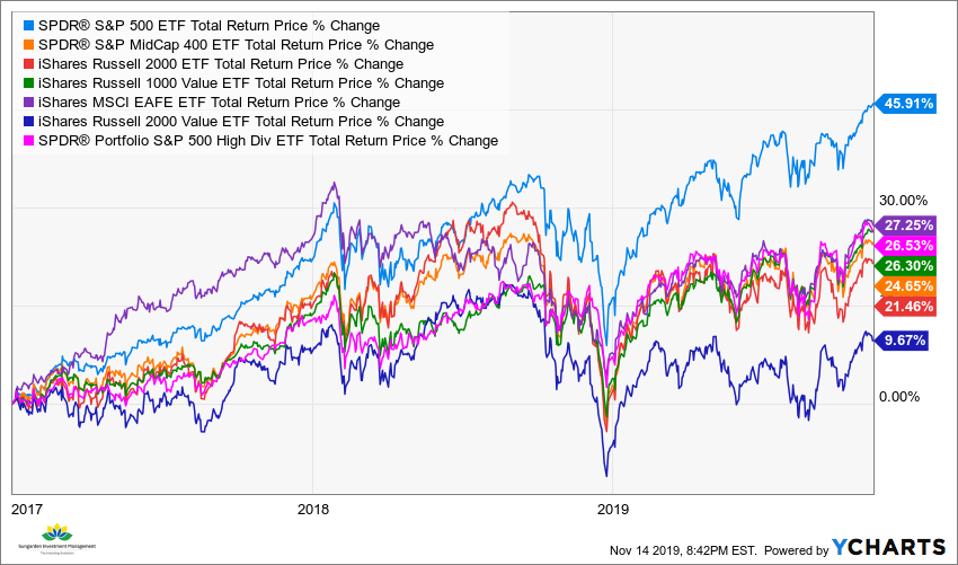
- Pick an index: There are many indexes you can track using index funds. The most widely used index is the S&P 500 index, which includes 500 of the largest U.S. companies. However, other indexes, such as the NASDAQ, which tracks the largest technology companies, can also be a good starting point, or an index fund to further diversify your portfolio.
- Start Small: Don’t be intimidated by the idea of needing a lot of money to invest. Many brokers allow you to buy fractional shares, so you can start with just a few dollars.
- Diversify. While indexes are already much more diverse than individual stocks, it can still be a good idea to invest in other index funds, such as the Russel 2000, which tracks small-cap U.S. stocks, to further diversify your portfolio.
- Automate Your Investments: Set up a recurring deposit into your investment account. This “set it and forget it” approach helps you build wealth over time without the stress of timing the market.
Your First Steps Toward Financial Freedom
If you’re new to investing, remember that every expert was once a beginner. By starting with index funds, you’re building a solid foundation for future financial growth. Over time, as your confidence and knowledge grow, you can explore other investment strategies—but the simplicity and reliability of index funds can serve as your launchpad.
Final Thoughts
Investing doesn’t have to be complicated. With index funds, you have a low-risk, low-maintenance entry point into the stock market. The key is to start early, invest consistently, and give your money time to grow. Open your brokerage account today and begin your journey toward financial independence.
Have questions about index funds? Drop a comment below or subscribe for more beginner-friendly investment tips!

 The Power of a Dollar
Leave a comment